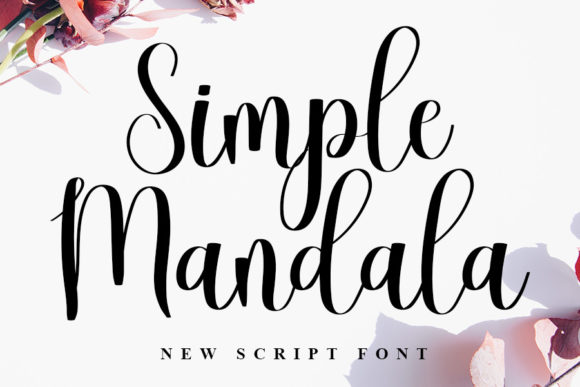
Simple Mandala Font
As a designer working on a lifestyle blog redesign, I found myself searching for a font that could bring a sense of calm and refinement to the site’s visual identity. Simple Mandala, a script handwritten font, emerged as the perfect choice. Its elegant, modern strokes and soft curves offered a fresh yet timeless feel that aligned with the blog’s focus on mindfulness and creative living.
The first time I used Simple Mandala for a blog header, it transformed the entire tone of the page. The font’s subtle imperfections gave it a personal, handcrafted quality, while its clean structure ensured it remained legible at any size. It felt like a breath of fresh air in an otherwise saturated digital space.
Simple Mandala for Wedding Invitations and Elegant Branding
Simple Mandala is more than just a font—it’s a design tool that can elevate any project requiring a touch of sophistication. When I collaborated on a wedding guide, I chose Simple Mandala for the cover text and section headings. Its flowing lines and balanced spacing made it ideal for invitations, thank-you cards, and event programs. The font’s ability to blend tradition with modernity made it a standout choice for couples looking to create a cohesive, stylish brand.
For branding purposes, Simple Mandala offers a versatile foundation. Whether used in logo design, social media posts, or packaging, it maintains a consistent visual language that feels both professional and approachable. The font’s handwritten style adds a human element, making it perfect for brands that want to convey authenticity and warmth.
Simple Mandala in Digital Magazines and Ebook Covers
When designing an ebook cover for a collection of poetry, I turned to Simple Mandala to give the title a sense of grace and movement. The font’s fluidity complemented the lyrical content, creating a visual rhythm that drew readers in. It worked especially well when paired with a serif font for the subtitle, allowing the text to breathe and stand out against the background.
In digital magazines, Simple Mandala can be used for article titles, pull quotes, and section headers. Its readability on screens makes it a great option for long-form content, while its decorative elements add visual interest without overwhelming the reader. The font’s adaptability ensures it can fit into a wide range of editorial layouts, from minimalist designs to more ornate compositions.
Simple Mandala for Social Media Posts and Creative Content
Social media platforms demand fonts that are both eye-catching and easy to read. Simple Mandala excels in this space, offering a balance between style and clarity. I’ve used it for Instagram stories, Pinterest graphics, and Facebook posts, where its elegance helped set a tone of creativity and professionalism.
For content creators, Simple Mandala can be a powerful tool for building a recognizable aesthetic. Whether used in captions, banners, or promotional materials, it helps establish a cohesive brand presence. Its versatility allows it to work across different formats, from short-form posts to longer video descriptions, ensuring a unified look across all platforms.
Simple Mandala in Coaching Workbooks and Printable Guides
When developing a printable planner for a coaching business, I needed a font that felt both motivational and approachable. Simple Mandala provided the perfect solution. Its soft, flowing lines added a sense of warmth and encouragement, making the content feel more personal and engaging.
For workbooks and guides, Simple Mandala works best in headings, section titles, and decorative accents. It’s not ideal for large blocks of text, but when used strategically, it enhances the overall reading experience. Pairing it with a clean sans serif font for body copy ensures that the content remains accessible while still maintaining a polished look.
Simple Mandala for Print Materials and Editorial Layouts
Printed materials such as brochures, menus, and stationery benefit greatly from the use of Simple Mandala. Its handwritten style gives a tactile, artisanal quality that digital fonts often lack. I’ve used it for business cards, event flyers, and custom envelopes, where its refined appearance elevated the overall design.
In editorial layouts, Simple Mandala can be used for headlines, chapter openers, and decorative elements. It pairs well with traditional serif fonts for body text, creating a harmonious balance between formality and creativity. For designers working on print projects, the font’s multilingual support and file format options make it a practical choice for international audiences.
Simple Mandala for Ebooks and Course PDFs
Ebook authors and course creators often seek fonts that enhance readability without sacrificing style. Simple Mandala fits this need perfectly. I’ve used it for ebook titles, chapter headings, and section dividers, where its elegance added a layer of sophistication to the content.
When working on a downloadable course, I made sure to check the font’s licensing terms before using it in the final PDF. Simple Mandala’s commercial license allowed me to include it in the design without restrictions, which was essential for maintaining a professional appearance. The font’s clear letterforms also ensured that the text remained legible on various devices and screen sizes.
Simple Mandala for Newsletter Headers and Web Design
Newsletters require a font that can capture attention while maintaining a clean, organized layout. Simple Mandala has proven to be an excellent choice for newsletter headers, where its flowing lines create a sense of movement and energy. It’s particularly effective when used alongside a simple sans serif font for the body text, creating a visually balanced composition.
In web design, Simple Mandala can be used for hero sections, call-to-action buttons, and navigation menus. Its modern aesthetic aligns with current design trends, while its readability ensures that users can engage with the content without strain. For designers looking to add a unique touch to their websites, the font offers a compelling alternative to more generic typefaces.